Is the camper parked? How much can you recover from renting it out
You bought a camper to travel. In practice, you only use it for three to four weeks a year, while the rest of the time it sits in the parking lot, and the costs keep piling up: insurance, maintenance, parking, depreciation, and loan or lease payments. The question isn't whether renting it out is profitable, but how much of these costs you can recover without giving up your own trips.
Do you want to calculate this for your camper right away? Use the camper rental calculator: select the camper standard, seasons, and your own trips, and we suggest the prices based on rental ads on Gumtree from 2026.
How much does a camper cost when you're not using it
You incur fixed costs regardless of whether the camper moves:
- insurance (liability, often comprehensive),
- parking space or garage,
- technical inspection and basic maintenance,
- depreciation (loss of value), which is the largest expense, even though you don't see it in your bank account,
- loan or lease payment, if the camper is financed.
For many, this amounts to several thousand euros annually. Renting does not change these costs, but allows you to earn from them during periods when you would not be traveling anyway.
Simple calculation (example)
The following figures are examples, not a promise of income. You can quickly input your own numbers in the calculator.
Assumptions: average price of €100 per day, mandatory end cleaning charged to the customer, and rental costs include additional usage, servicing, insurance for rental, and our subscription.
| 15 days a year | 30 days a year | 50 days a year | |
|---|---|---|---|
| Rental income | €6,000 | €12,000 | €20,000 |
| Additional usage and servicing (approx. €15/day) | -€900 | -€1,800 | -€3,000 |
| Rental insurance (example) | -€2,000 | -€2,000 | -€2,000 |
| CamperFleet subscription (Start plan, €30/month) | -€1,668 | -€1,668 | -€1,668 |
| Remaining before tax | approx. €1,430 | approx. €6,530 | approx. €13,330 |
What does this mean?
- With 15 days, the rental barely covers its own costs. This is often too little to make it worthwhile to start.
- With 30 days, there is a sum left that covers, for example, insurance and parking space.
- With 50 days, the rental pays back a real part of the installment, or even the whole amount.
Remember about taxes. Income from rental activities is subject to taxation, and the form of accounting depends on your situation, so consult it with an accountant.
Break-even Point: How Many Days You Need to Rent
The formula is simple:
break-even point = fixed rental costs ÷ profit from one day
For example, the fixed rental costs are insurance and subscription (around € 800), and the profit from one day is 400 - 60 = 340 €. This gives around 2.4 days. Each additional day is pure profit before tax.
When Does Renting Make the Most Sense
- Outside of your own trips. Block out the dates in the calendar when you are traveling yourself, and rent out the rest.
- During the season. Public holidays, July, and August are times when demand is highest, and you can set higher seasonal prices.
- On weekends. Short rentals, e.g. for 2–3 days, often sell easiest outside of peak season.
- When the camper is well-maintained and well-described. Photos and equipment make a difference.
What to watch out for
- Insurance. Private policies usually exclude commercial use. Check this before you rent for the first time.
- Deposit. Set it at a level that covers the most likely damages. With CamperFleet, you block it on the client's card, you don't charge it.
- Agreement and protocol. Photos at pickup and return protect you in case of a damage dispute.
- Time. Pickup, return, and cleaning take a few hours per rental. Include this in your calculations.
How CamperFleet Shortens the Path to First Rental
The biggest obstacle is usually not the bill, but the amount of work at the start. With CamperFleet:
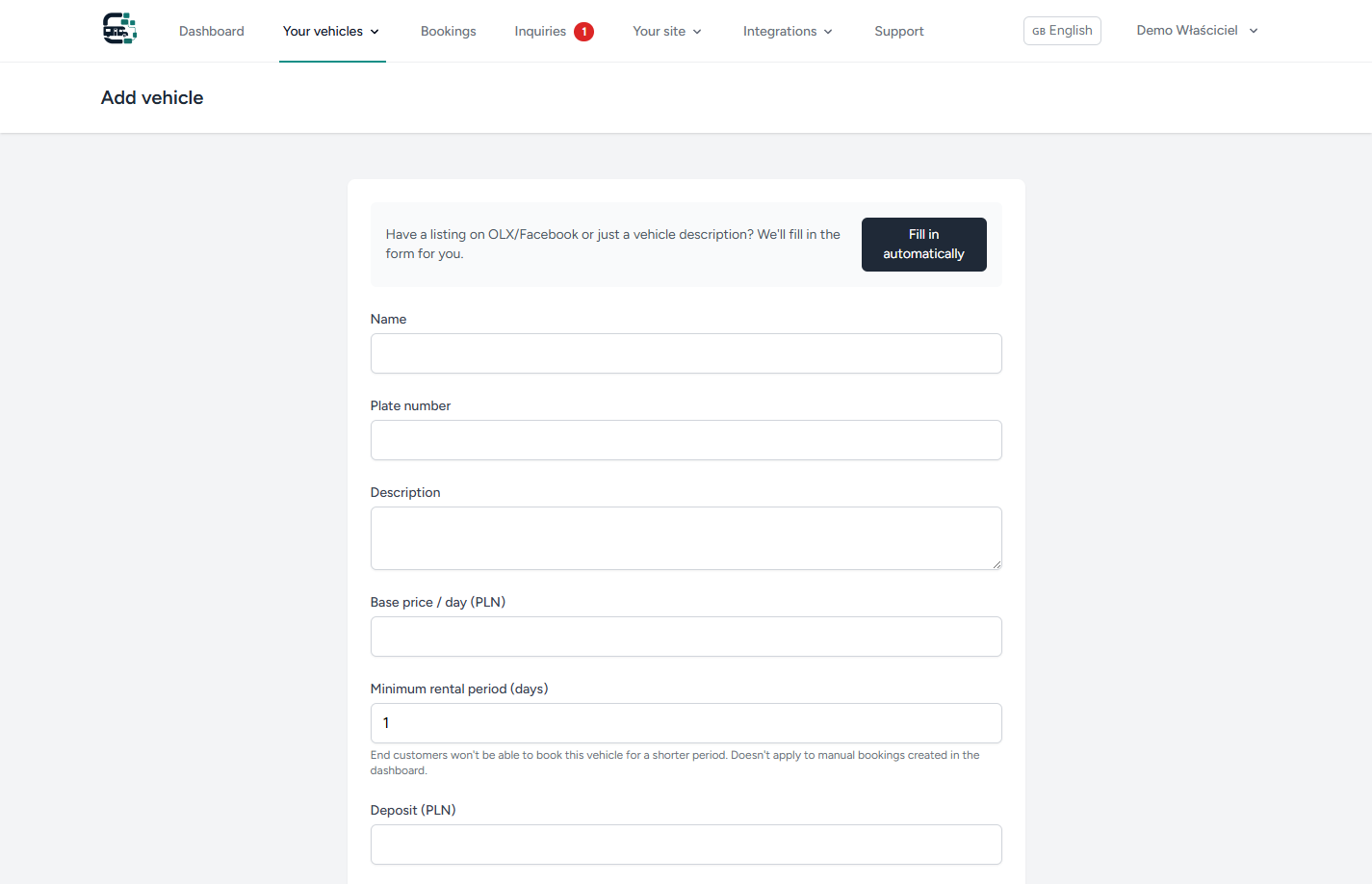
- you paste the link to your ad from Gumtree or Facebook, and AI fills in the vehicle form,
- you set the seasons and extras once,
- the customer reserves, pays a deposit, and accepts the contract online,
- the calendar ensures that no date is sold twice.
If you own a camper but hadn’t planned to rent it out because it seems complicated, read this too: I own a camper and don’t want to rent it out because it’s complicated.